Frequently asked questions about la sagrada familia
Why Is La Sagrada Familia Famous?
The church is considered, by many, an architectural masterpiece thanks to its expansive dimension, and richness in details and symbolism. La Sagrada Família Gaudí's most famous work, and a true gem in Barcelona’s skyline.
Why Is The Sagrada Familia Unfinished?
For several reasons. In 1936, during the Spanish Civil War, the works were interrupted a group broke into the Sagrada Familia setting the crypt on fire, burning most of Gaudí’s original design documents.
Also, at the start, the construction of the Sagrada Familia relied only on private donations, and progress was slow since it depended on the amount and frequency of the donations.
When Will La Sagrada Familia Be Finished?
The temple is still under construction, and it's expected to be completed in 2026, the 100th anniversary of Antoni Gaudi’s death.
CuddlyNest Team
CuddlyNest is the world's largest vacation rental search engine, comparing millions of accommodations across 200+ booking sites. Our editorial team of seasoned travelers and local experts shares insider tips, destination guides, and travel inspiration to help you plan the perfect trip — whether you're booking a cozy cabin, a beachfront villa, or an apartment in the heart of the city.
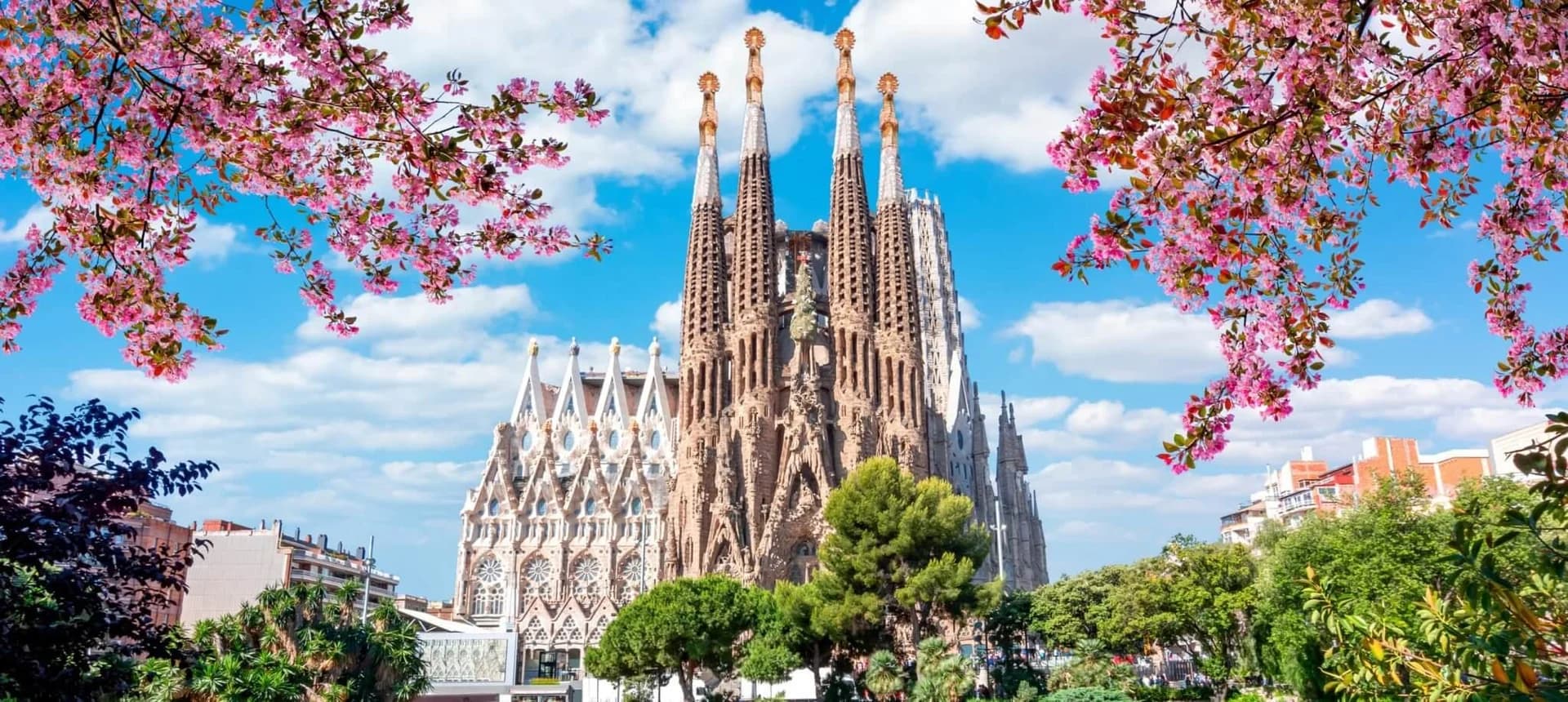
Boasting an architectural grandeur that is hard to describe with words, the Basílica de la Sagrada Família is the most sparkling gem in Barcelona’s skyline.
This veritable masterpiece designed by the one-and-only Antoni Gaudí keeps fascinating people with its extraordinary symbolism and controversial history, which dates back to more than a century.
To help you make the most out of your visit to La Sagrada Familia, we've created a comprehensive guide with all the information you need to know about the basilica. From its fascinating history to the best time for visiting it, we say it all.
La Sagrada Familia Guide
History
The beginning of the construction of La Sagrada Familia dates back to 1877 when a congregation of devotees of St. Joseph decided to build a temple in his honor.
Legendary architect Antoni Gaudí did not become involved with the development of the church until 1883, and the first project of La Sagrada Familia was designed in Gothic style by the architect Francisco de Paula del Villar y Lozano.
Don Francisco de Paula del Villar y Lozano soon abandoned the project, and in 1884 Gaudí, who was just 31 years old, was appointed director.
The architect changed Lozano’s original plans for a neo-Gothic church and began designed the building that not only made him the master of Catalan Modernism but changed Barcelona’s skyline forever.
Gaudi dedicated all his final years to the construction of La Sagrada Familia, working exclusively for the Expiatory Temple day and night.
He died unexpectedly in 1926 when the basilica was between 15 and 25 percent completed. After Gaudí’s death, Domènec Sugrañes—one of his closest assistants—took over the project.
But the architect was aware that the construction of the Sagrada Familia would last for centuries, and that it wouldn’t be finished during his lifetime. He left detailed plans for the basilica’s most important parts — the central nave, the sacristy, and the façade of Glory —to guide the building’s completion.
Gaudí also opted for focusing on the front of the church, so people could enjoy a form of completion, and feel inspired by this magnificent monument.
La Sagrada Familia is still not complete today, and it is estimated that the current construction represents only 70% of the final design. In fact, the project will not be completed by the centenary of architect Antoni Gaudí's death in 2026.
The basilica is an expiatory temple, which means that the cost of the work is paid by voluntary donations. After World War II, and during the 1960s, Spain was suffering from grinding poverty, which seriously impacted donations, making the construction take even longer.
Architecture
Temple Expiatori de la Sagrada Família (Expiatory Temple of the Holy Family) is a true architectural dream and, by many, it’s considered one of the most amazing buildings in the world.
The basilica’s architectural grandeur resides on Gaudí’s desire to transform the building into an ambitious proposal for the church of the future. When the architect took over the project, in 1883, he maintained Francisco de Paula del Villar y Lozano’s cross plan, typical of Gothic cathedrals, but departed from the Gothic style in several ways.
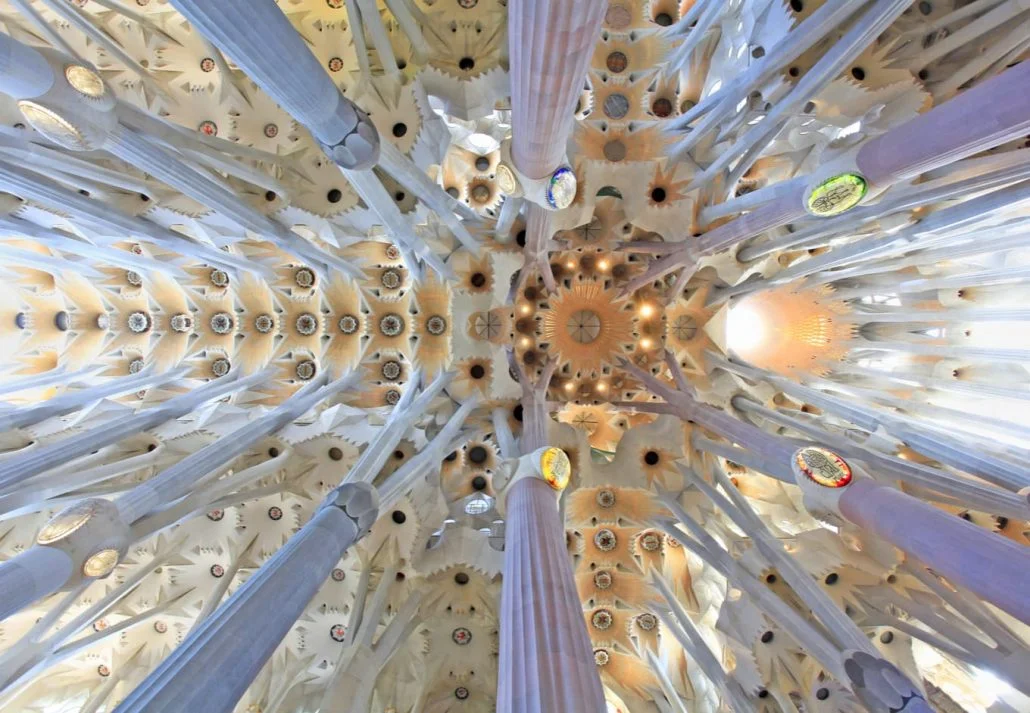
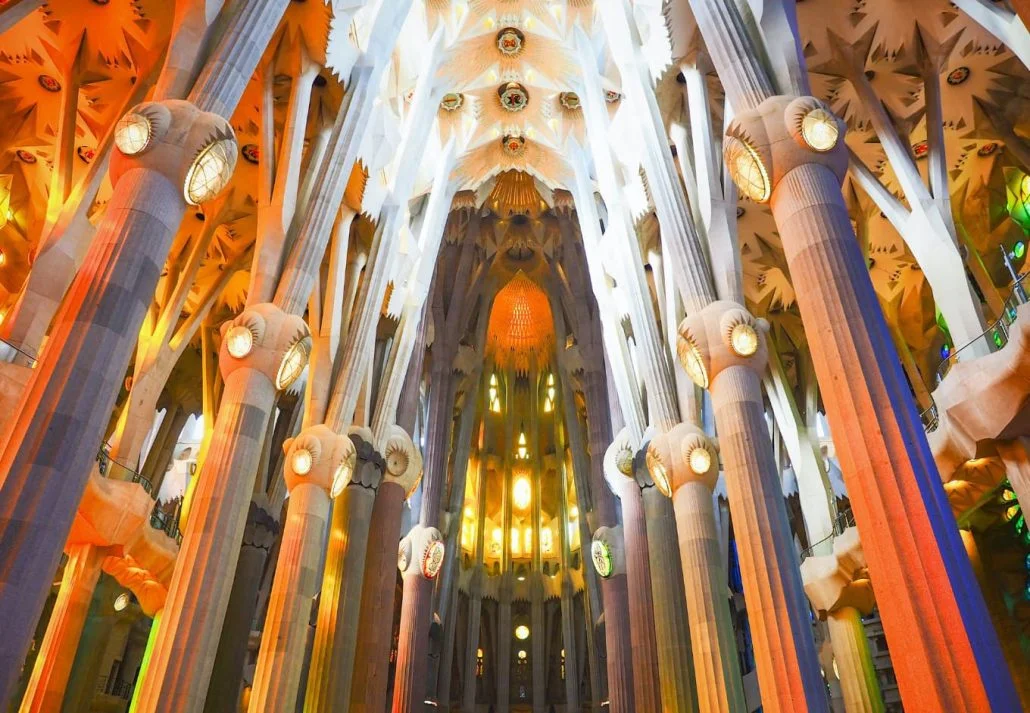
Sectioned into five naves, the layout of the Sagrada Familia resembles a Latin cross with massive dimensions. The interior of the church was also conceived to resemble a huge forest, with inclined columns representing tree trunks branching out from the capitals into the vaults.
Gaudí also decided to invert the balance of light often seen in Gothic cathedrals by shouting maximum contrast with the stained glass windows. He put the most transparent glass on top to illuminate the vaults, which are embellished with ceramic tiles and flecks of shiny gold and had the light decrease as it moves down. This gives the cathedral a transcendent atmosphere and a feeling of spiritual peace.
Gaudí also decided to embed religious symbolism in each aspect of the church. He designed three monumental façades that create a visual representation of Christian beliefs: the Glory façade, the Nativity façade, and the Passion façade, facing south, east, and west, respectively
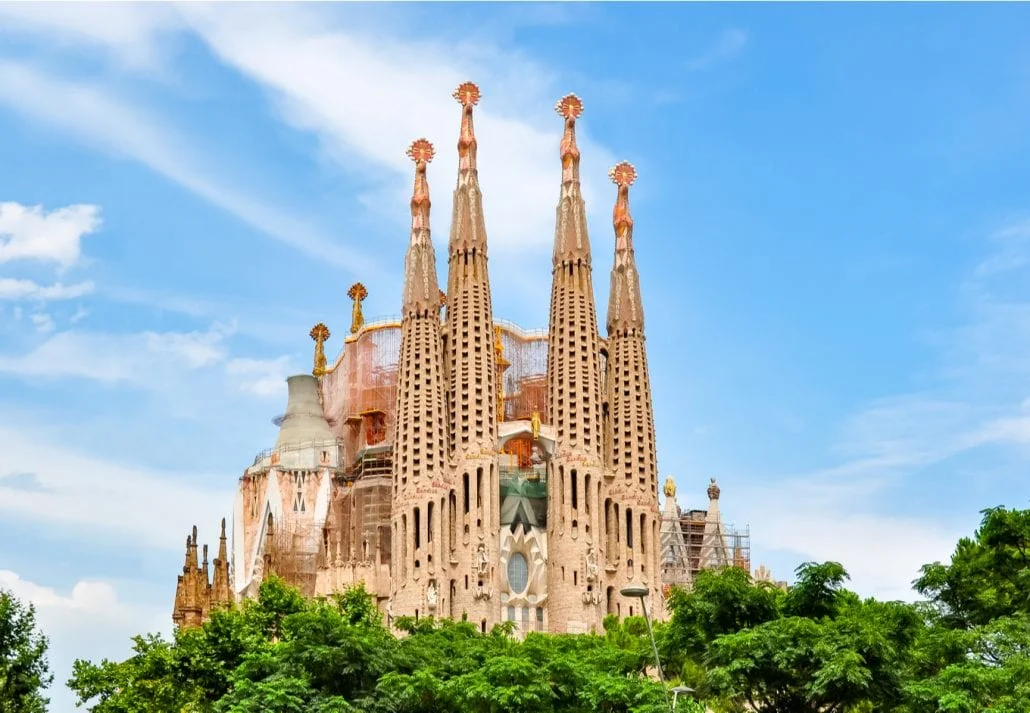
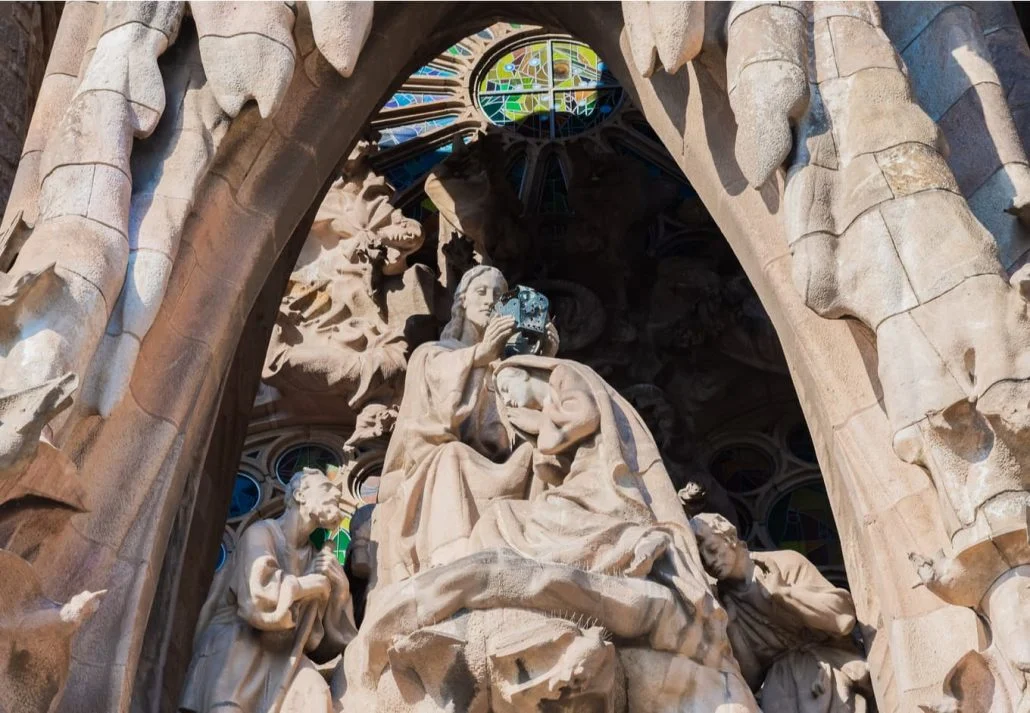
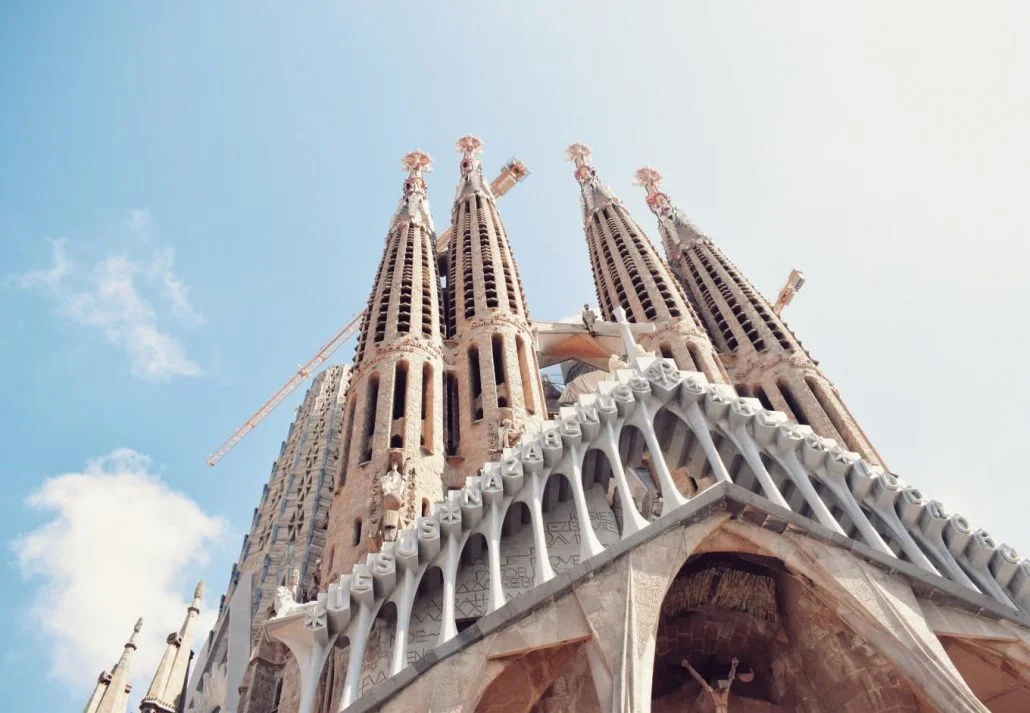
The Nativity façade represents the birth and childhood of Jesus Christ and features four towers that represent the Apostles Matthew, Barnabas, Jude, and Simon. Gaudí used not only human models, but also animals for molding sculptures on the façade.
For the Passion façade, which is more austere and simple than the Nativity, Gaudí designed sculptures carved from bare stones. He used solid straight lines forming rigid shapes in order to depict misery and death and show the brutality of Jesus Christ’s death.
The building of the Glory facade began in 2002, and once completed, it will be the tallest of all Sagrada Familia towers.
La Sagrada Familia will feature eighteen towers, with the central one symbolizing Christ, and the north end one representing the Virgin Mary.
Tips For Visiting La Sagrada Familia And How To Get There
Spain’s most popular tourist attraction, the basilica is visited by almost 5 million people each year — with a further 20 million people visiting the area just to look at it! This means that La Sagrada Familia tends to get overcrowded, especially during the peak season.
The Towers on the Nativity Façade and the Passion Façade, which are completed, and are open for visitors all year round with an extra cost when you book tickets to visit the basilica.
You can also choose one of their specialized guided tours, which are available in 4 languages — Catalan, Spanish, English, and French — and take around 50 min.
The best time to visit? Mondays, at around 9 am, are the quietest slot of the week. But in case you want to marvel at the effect of the stained-glass windows bathing the naves with color, visit the basilica between the mid-morning and mid to late-afternoon when sunlight strikes the windows directly.
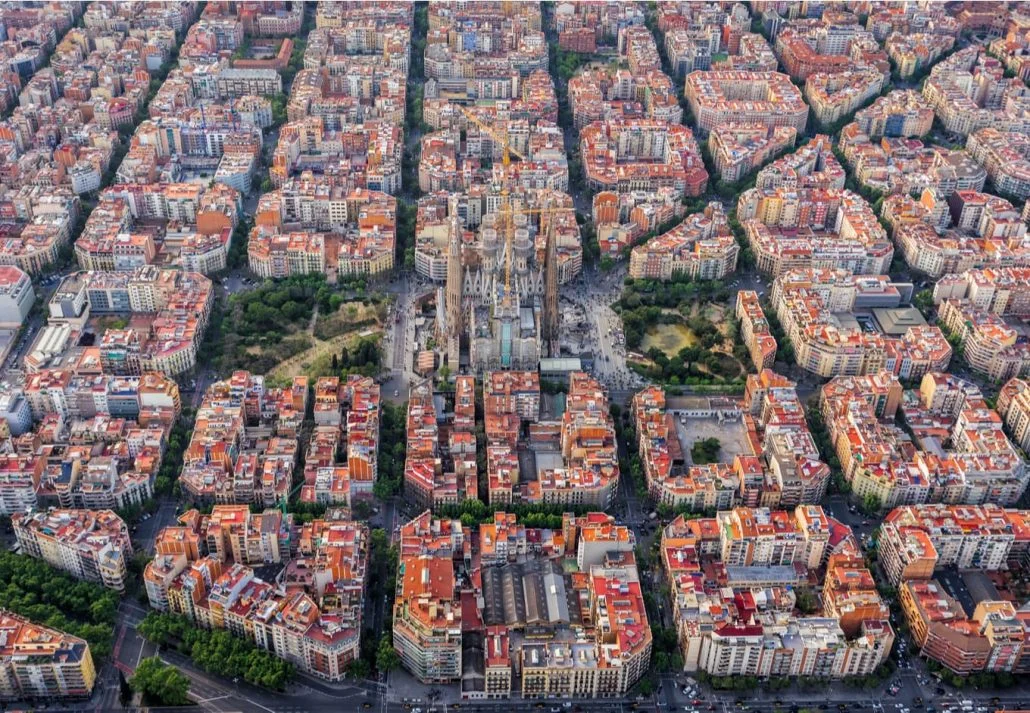
The famous church is located in a corner of the Eixample district not far from Gràcia. Visitors who are staying close to the city center can easily get there by public transport.
By Metro: L5 and L2 – Get off at Sagrada Familia station
By Bus: 19, 33, 34, 43, 44, 50, 51, B20 and B24.
If you're coming from the Barcelona El Prat Airport, note that there are no direct trains to Sagrada Familia. The best way is to take the train L9 sud from Barcelona airport metro station and then get off at Collblanc station, in Barcelona city.
In the Collbland station, you’ll change to the Barcelona underground metro, and take the metro train Sagrada Família, on the Blue line. This is the cheapest way of getting to the church.
The estimated fare for a taxi ride from the airport to La Sagrada Familia is 30,57€.
La Sagrada Familia Highlights
When purchasing your Sagrada Familia tickets, you might ask yourself if it’s worth paying extra to visit the towers. We believe that they’re worth the visit, as they offer the most breathtaking views of the city of Barcelona and the Mediterranean Sea. The hike up is quite steep and narrow, but you’ll be rewarded when you get to the top.
Another must-visit highlight is the Gaudi Museum, located on the ground floor of the Sagrada Familia. In there, you’ll discover original and restored drawings by Gaudí and photographs about the evolution of the construction process of the church.
Things To Do Nearby
Wondering for things to do after your visit? Great news: there's a laundry list of amazing things to do near La Sagrada Familia. Architecture enthusiasts can idly stroll around the leafyPasseig de Gràcia, where other Gaudí masterpieces like Casa Batlló and La Pedrera (Casa Milà) are located.
Another great place to visit near the basilica, especially if you're an art lover, is the Museu del Disseny. The museum is located within a 16-minute walk from La Sagrada Familia, and it's home to 70,000 objects — from glass art to furniture — spanning five centuries.
If you don't mind walking you can venture further out and walk about 30 minutes to the Parc de la Ciutadella, or even to Parc Güell. These places are perfect for families traveling with kids! Find out more about the best things to do in Barcelona with kids.
Did the hunger strike? Then head over the L’encís for a Mediterranean-style feast — try their vegetable fideuá with aioli — or to the award-winning Bardeni - Caldeni, which has a menu dedicated especially to meats.
Read our comprehensive Barcelona travel guide for more amazing tips and inspiration on what to do in the city.
La Sagrada Familia Tickets
Type
Includes
Price
Individual
Access to the basilica, and the Sagrada Familia Oficial App (with downloadable audioguide)
26€
Individual With Guided Tour
Access to the basilica; the Sagrada Familia Oficial App, and guided tour available in 4 languages — Catalan, Spanish, English, and French.
27€
Groups (up to 10 people)
Access to the basilica, and guided tour available in 4 languages — Catalan, Spanish, English, and French.
27€
5 Mistakes To Avoid At La Sagrada Familia
Not Buying The Ticket In Advance
The number of tickets is limited and they have fixed entry times. For that reason, it’s strongly recommended that visitors buy tickets online in advance — tickets are available online up to 2 months in advance.
Not Taking A Guided Tour
Guided tours are one of the best ways of learning each and every detail about the basilica — especially for first-timers.
On a guided tour, you'll be able to get some precious information about the church's history, construction, and architecture.
Not Leaving Enough Time For The Visit
Due to its richness of details and fascinating features, the church should be explored with no rush. Try to leave between 1h30 and 3h for your tour.
Only Touring the Inside of the Church
The interior of the church is surely marvelous, but the outside of the building is just as impressive. Take time to marvel at the façade, which is fully decorated with sculptures and intricate carvings that depict the history of Jesus Christ.
Not Dressing Accordingly
Hats, swimwear, see-through clothing are not allowed. Make sure to also wear comfortable shoes, especially if you plan on climbing to the towers.
10 Fun Facts About La Sagrada Familia
Gaudí Was Buried In The Basilica
Gaudí died while still working on the church's project after getting hit by a trolley car in Barcelona. He’s buried in the chapel of Our Lady of Carmel.
The Basilica Will Be The Tallest Religious Building In Europe
After completion, the Tower of Jesus Christ (the central tower of the basilica) will reach 170 meters tall.
It's Been Under Construction for Over a Century
La Sagrada Familia has been under construction for exact 136 years.
The Pope Consecrated The Basilica
On 7 November 2010, Pope Benedict XVI visited the temple, declaring it a Basilica and officiating a solemn mass.
La Sagrada Família Was Designated A World Heritage Site
Thanks to its historic significance, the basilica was designated a World Heritage Site by UNESCO, in 2005.
It is the most visited attraction in Spain
Sagrada Familia attracts 5 million people every year.
Real People Are Immortalized On The Façade
The Nativity façade, one of the basilica’s three facades, features a collection of faces sculpted within the stone. These faces were sculpted from the death masks of deceased Barcelona citizens and builders of La Sagrada Familia. This was a way of paying tribute to the people who contributed.
The Basilica Was Vandalized During The Spanish Civil War
In 1936, in the midst of the Spanish Civil War, a group of anarchists broke into the Sagrada Familia and set it on fire. A significant part of Gaudí’s workshop, including plaster models, plans, and photographs, was burnt.
George Orwell Hated It!
In fact, the English novelist described the basilica as “one of the most hideous buildings in the world” and hoped it would be destroyed during the Spanish Civil War.
It All Started With A Spanish Bookseller
Josep Maria Bocabella I Verdaguer, the owner of a religious bookshop, decided he wanted to build a church inspired by the Basilica Della Santa Casa, in Loreto, Italy. The Association of Worshippers of St. Joseph had been set up to raise funds for the building.
Accommodation Near La Sagrada Familia
Located close to the famous Eixample district, the Sagrada Família area is a great place to stay in Barcelona. This pleasant neighborhood, named after Antoni Gaudí’s renowned basilica, lies away from touristy areas, such as the Gothic Quarter, El Raval, and Born, but it’s still well located.
In fact, some of Barcelona’s legendary tourist attractions are located within a walking distance from the Sagrada Família area.
Casa Mila is a 20-minute walk away
Casa Batlló is a 25-minute walk away
Park Güell is a 25-minute walk away
Aside from mouthwatering tapas bars, and leafy shopping streets, the vicinities of this neighborhood are also dotted with some stellar accommodation options for travelers who are visiting Barcelona.
Not far from La Sagrada Familia there are stylish boutique hotels like Hotel Casa Bonay Barcelona, which is beautifully set in a restored building dating from 1856, and four-star superior hotels such as the H10 Cubik.
The current total estimated building costs stand at €374 million.
What Kind Of Church Is The Sagrada Familia?
La Sagrada Familia is a Roman Catholic church. In 2010, Pope Benedict XVI consecrated the Basilica for religious worship and designated it a minor basilica.