CuddlyNest is the world's largest vacation rental search engine, comparing millions of accommodations across 200+ booking sites. Our editorial team of seasoned travelers and local experts shares insider tips, destination guides, and travel inspiration to help you plan the perfect trip — whether you're booking a cozy cabin, a beachfront villa, or an apartment in the heart of the city.
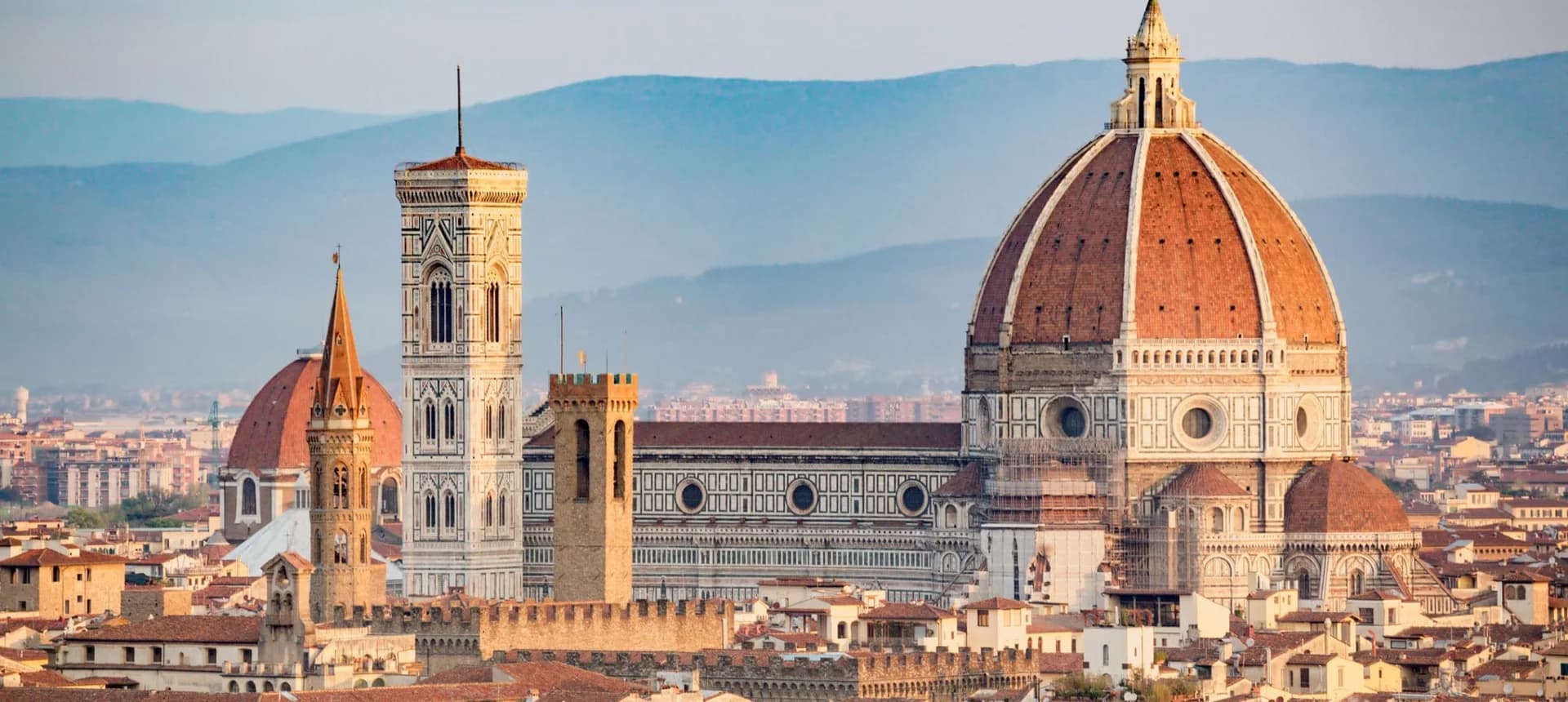
Architectural grandeur, achingly beautiful artworks, and rich history dating back to the 12th century make the Cathedral of Santa Maria del Fiore one of the most spellbinding places in Florence.
Gloriously located in Piazza del Duomo (Duomo Square), in the heart of the city, this whooshing building is Italy's third-largest church, and one of the country’s most precious cultural treasures.
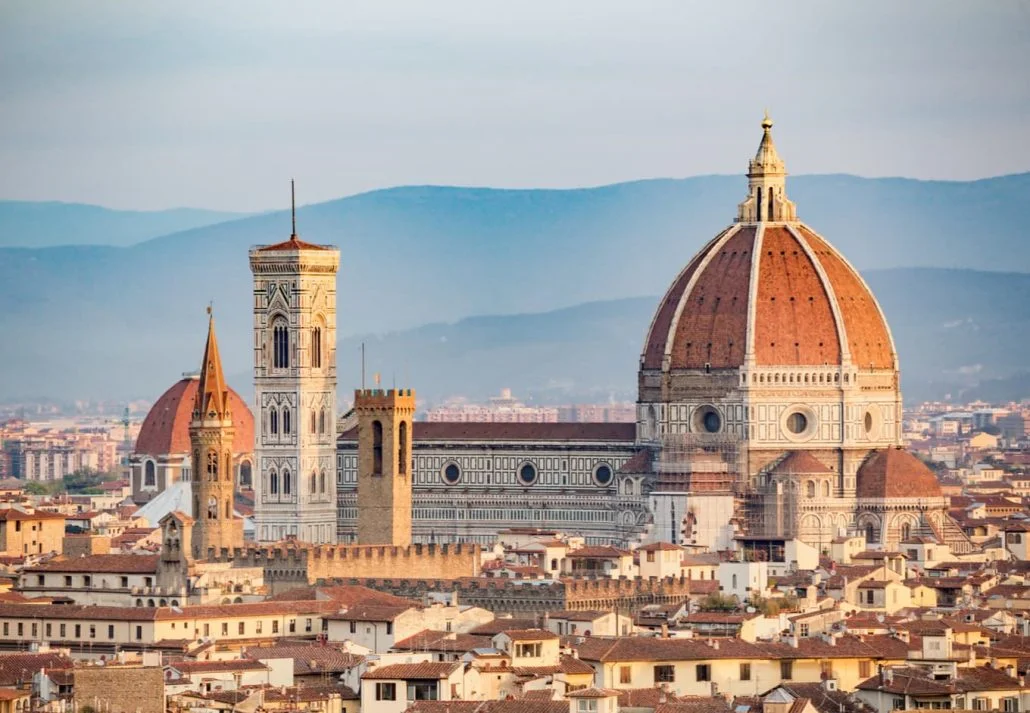
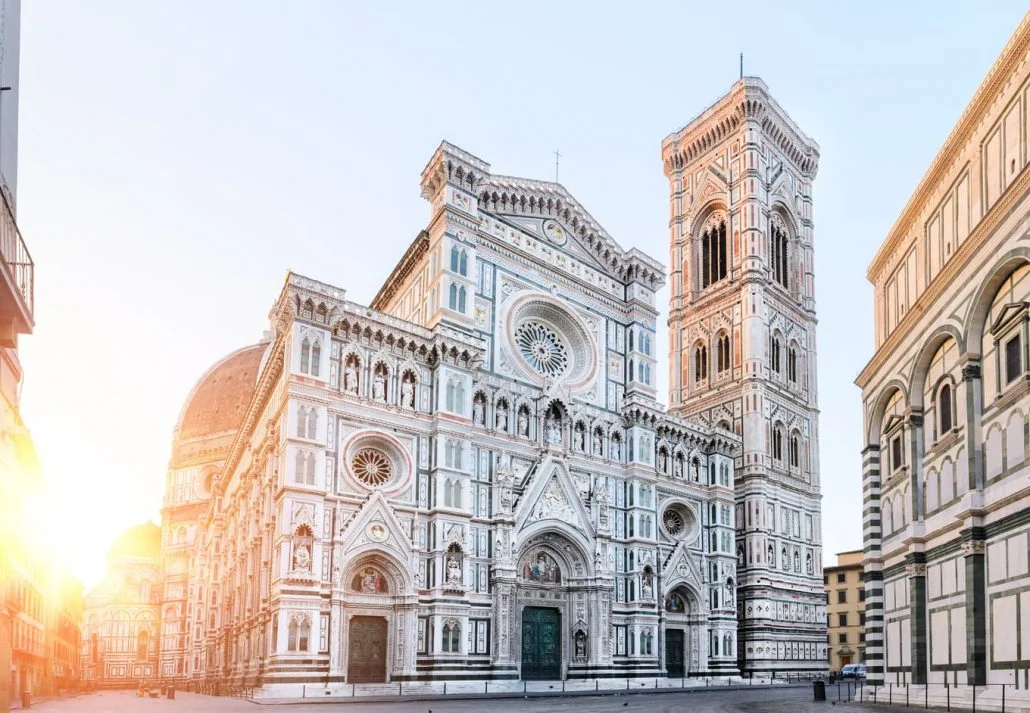
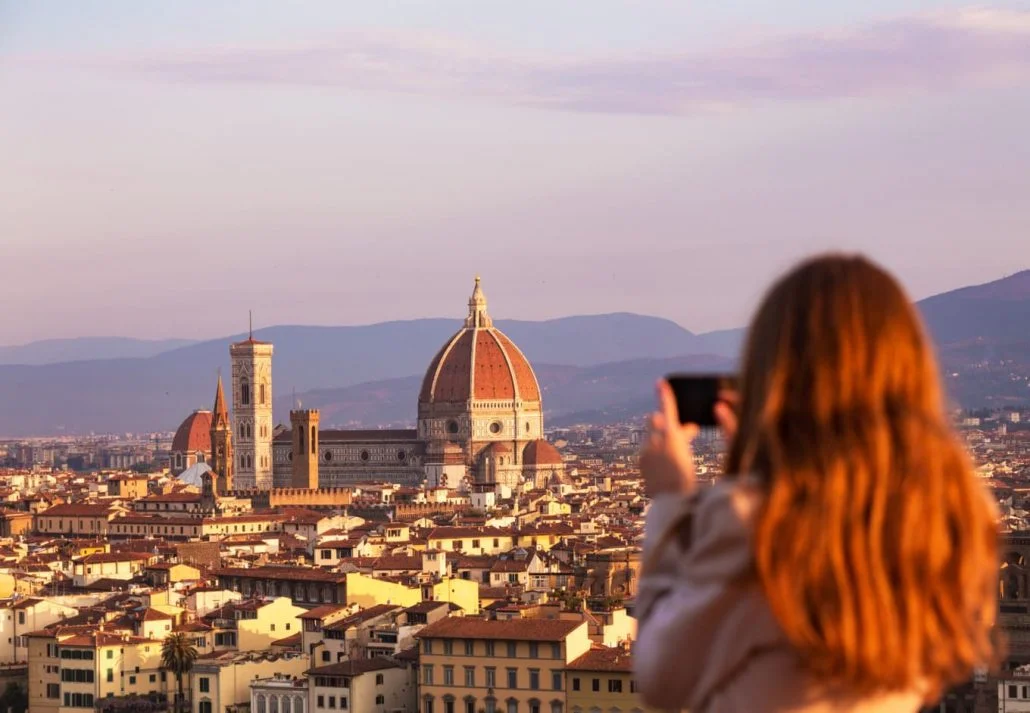
The Florence Cathedral has been dazzling visitors for years thanks to its heart-capturing details, such as the 19th-century Gothic Revival façade by Emilio De Fabris covered in green and pink marble panels, the striking stained-glass windows, and a collection of paintings and statuary by Renaissance masters. Its most spectacular feature, however, is the dome, which was designed by Filippo Brunelleschi and offers drop-dead views of Firenze.
Regarded as one of Europe’s most enchanting churches, the Florence Cathedral is definitely worth a visit. The building's precious details are worth seeing up close, and they provide visitors with valuable insights into architecture, history, culture, and art.
To help you make the most out of your visit to the Firenze Cathedral, we’ve created a comprehensive guide with all the information you need to know about the church. From its fascinating history to the best time for visiting it, we say it all.
The Florence Cathedral as we see it today is the end result of years of work, and the construction of the building was overseen by several architects throughout the years.
Building work began in 1296 under the design of architect Arnolfo di Cambio. The cathedral was erected on the site of Florence's second cathedral, which was built in the 7th century and dedicated to Santa Reparata (the remains of this ancient can be seen in the crypt).
Arnolfo died in 1302, and work on the cathedral slowed for almost 50 years. The construction was resumed in 1334 by painter and architect Giotto, who was appointed as the master builder, assisted by architect Andrea Pisano. Giotto continued di Cambio's work, and his major accomplishment was the campanile (the bell tower), aka the Giotto’s Campanile. Standing at 278 feet, the bell tower offers visitors the most show-stopping views of Florence.
The construction was interrupted again after Giotto’s death, on 8 January 1337. After that, several architects took the lead and designed plans to enlarge the original project and build a dome (the initial project left the cupola unfinished). In 1418, a competition announced by Opera del Duomo was held to find a designer for the dome. The winner was sculptor and architect Filippo Brunelleschi who, after many mathematical calculations, decided to build a dome with a slight point, rather than a smooth, round top. It was the first 'octagonal' dome in history to be built without a temporary wooden supporting frame, and still to the present day considered one of the most impressive projects of the Renaissance.
On 25 March 1436, the cathedral was consecrated by Pope Eugene IV, and the beautifully decorated façade was completed in 1887.
The cathedral complex, including the Baptistery and Giotto’s Campanile, is part of a UNESCO World Heritage Site covering the historic center of Florence.
Architecture Of Cathedral of Santa Maria del Fiore
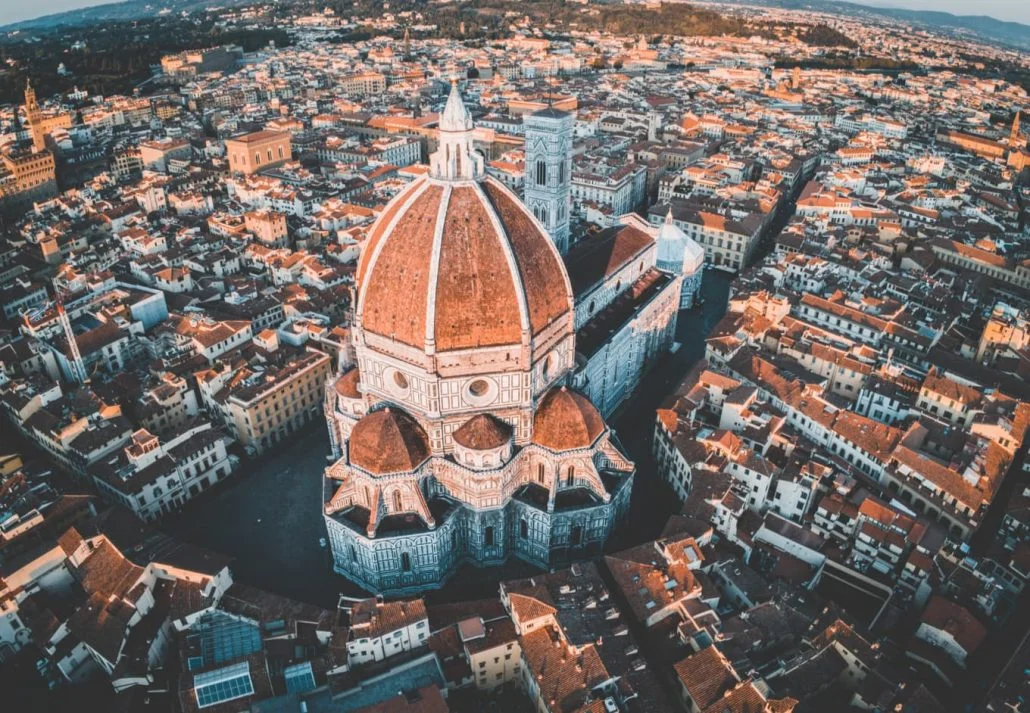
The cathedral complex comprises three buildings: the Cathedral itself, the Baptistery, and Giotto's Campanile (bell tower). All three buildings were designated a UNESCO World Heritage Site covering the historic center of Florence.
Located in the Piazza del Duomo ("Cathedral Square"), the cathedral was built as a basilica, having a wide central nave of four square bays, with an aisle on either side. The plan forms a Latin cross, with the nave and aisles being separated by wide pointed Gothic arches resting on composite piers.
The dimensions of the cathedral are massive: the building area is 89,340 sq ft, length 502 ft, width 125 ft, and width at the crossing 300 ft. The height of the arches in the aisles is 75 ft., and the height of the dome is 375.7 ft, making it the fifth tallest dome in the world.
When construction work began in 1296, the cathedral was built in a style of Gothic architecture and ornamented with the characteristic inlaid marble paneling of Tuscan-style Romanesque architecture.
The exterior boast the geometric patterning of its revetment (face), made from encrusted marble, and mimicking the Tuscan Romanesque style of the revetment on the baptistery, which can also be seen on the Florentine church of San Miniato.
The Highlights of theCathedral of Santa Maria del Fiore
The Bell Tower
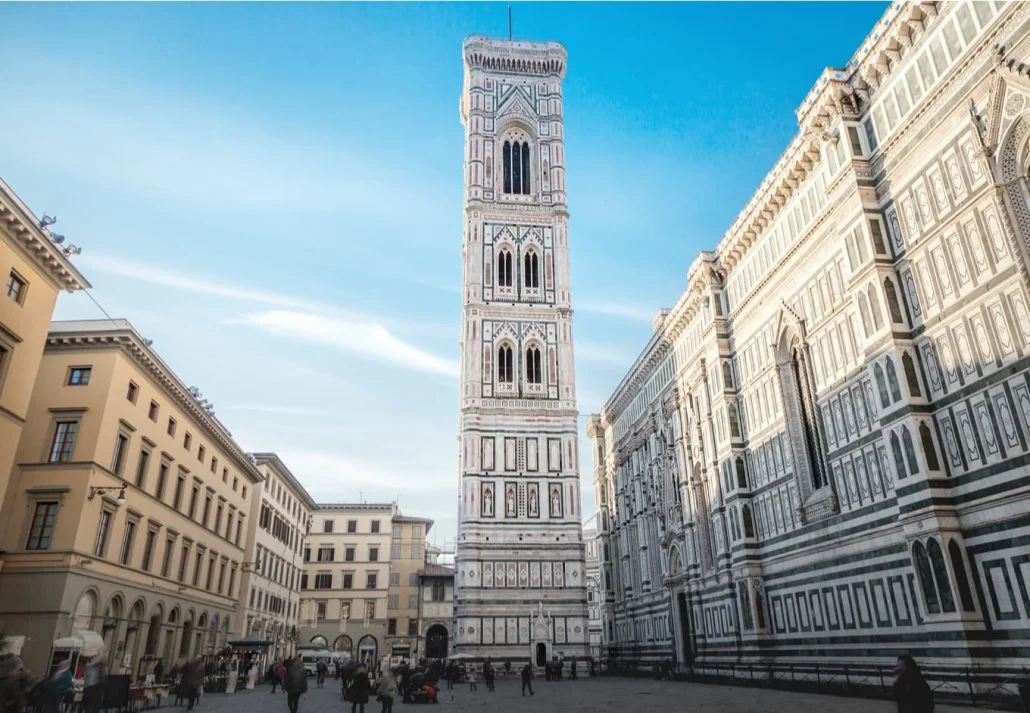
Standing at 277 feet tall, barely detached from the cathedral façade, Giotto's bell tower is one of the buildings' most striking features. The free-standing campanile was begun in 1334 by Giotto, who died in 1337 having completed only the first part of the project. Architect Andrea Pisano carried Giotto's design up to the first two levels, while artists such as Alberto Arnaldi adorned the outside with carved lozenges.
The campanile is beautifully decorated with works of art, which are all copies (the originals were removed between 1965 and 1967 and are now on display in the Museo dell'Opera del Duomo, behind the cathedral).
You’ll also spot marble figures standing out on a background of blue majolica, and 16 life-size statutes, which are the composite work of several artists from the 1300 and 1400s, including Andrea Pisano and Donatello.
There are 414 steps that lead visitors to the very top of the campanile. From up high, it’s possible to take in the most breathtaking views of Florence and see the Cathedral and the Cupola of Brunelleschi from a unique perspective.
The Dome
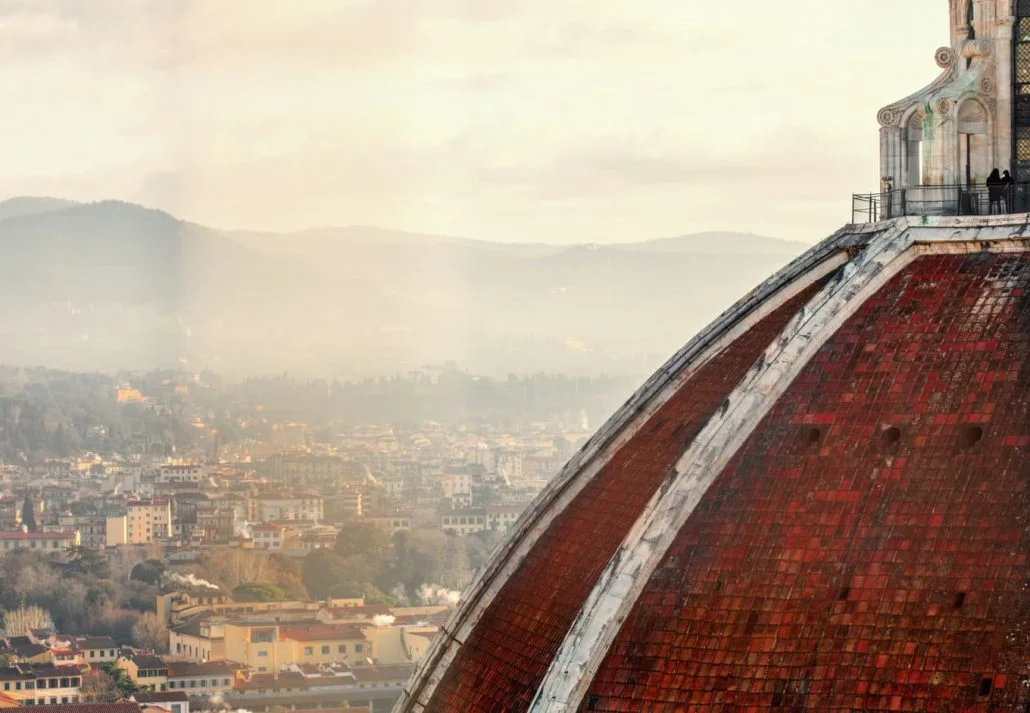
The iconic dome of Florence’s Cathedral, also known as “Duomo di Firenze” and “Brunelleschi's dome”, is one of the greatest masterpieces of the Italian Renaissance. Constructed between 1420 and 1436 by Filippo Brunelleschi, the dome was considered a true innovation at the time, as it was built without a supporting structure. Plus, at the time, it was the largest dome ever built.
Interestingly enough, the cathedral's dome actually consists of two domes: one internal, more than 6 ft thick, and boasting large arches held together by ribs, and one external covered with terracotta tiles and marked by 8 white marble ribs.
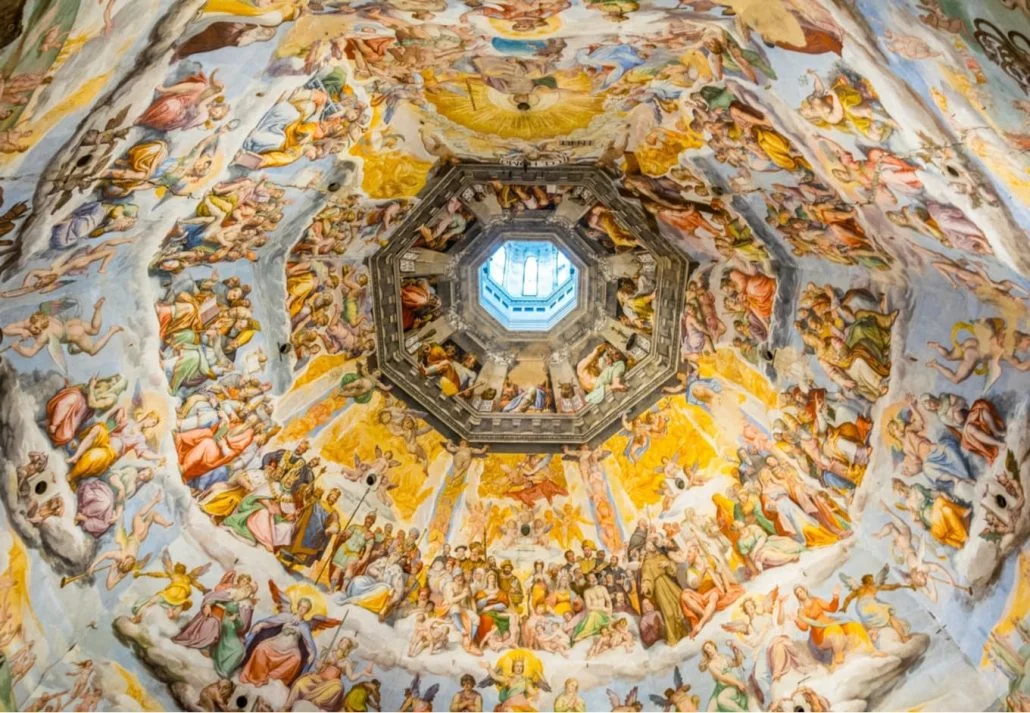
The oculus of the dome is surmounted by a large lantern: which was built after the death of Brunelleschi’s project. On the top lies a golden copper ball with an apical cross, a work by Andrea del Verrocchio. Between 1572 and 1579 Giorgio Vasari and Federico Zuccari painted an enormous Last Judgment mural in the internal vault of the dome, partly inspired by the mosaics of the Baptistery. This is considered the largest mural in the world.
The Façade & The Main Portal
Entirely dedicated to the Mother of Christ, the façade boasts three huge bronze doors dating from 1899 to 1903. They’re adorned with beautiful mosaics designed by Niccolò Barabino, and represent Charity among the founders of Florentine philanthropic institutions; Christ enthroned with Mary and John the Baptist; and Florentine artisans, merchants, and humanists. Giuseppe Cassioli sculpted the right-hand door.
On top of the façade is a series of niches with the twelve Apostles. In the middle, there’s the Madonna with Child. Between the rose window and the tympanum, there is a gallery with busts of great Florentine artists.
The Interior
While the interior is rather austere compared to the outside, there are many captivating pieces of art scattered throughout the building. A variety of sculptures, mosaics, frescoes, and other artworks, attributed to many famous Florence artisans, adorn the place. Above the main door, there’s the colossal clock face with fresco portraits of four Prophets or Evangelists by Paolo Uccello (1443).
The interior also features 44 otherwordly stained glass windows, the largest undertaking of this kind in Italy in the 14th and 15th centuries. In the aisles and in the transept, you’ll find windows depicting saints from the Old and the New Testament. The circular windows in the drum of the dome or above the entrance depict Christ and Mary. They were designed by some of the greatest Florentine artists, including Donatello, Lorenzo Ghiberti, Paolo Uccello, and Andrea del Castagno.
Christ crowning Mary as Queen, the stained-glass circular window above the clock, was designed by Gaddo Gaddi in the early 14th century, while the one in the drum of the dome (Coronation of the Virgin) was conceived by Donatello.
The beautiful frescoes that ornate the interior of the cathedral also deserve your attention. These include Dante Before the City of Florence by Domenico di Michelino (1465), depicting scenes from The Divine Comedy; the Funerary Monument to Sir John Hawkwood by Paolo Uccello (1436, the one on the left below), The Last Judgement, the most significant artwork in the entire building by Giorgio Vasari, and the equestrian statue of Niccolò da Tolentino by Andrea del Castagno (main altar).
Another worth-seeing detail is the crucifix on the high altar was made in 1495-1497 by Benedetto da Maiano.
Essential Information For VisitingCathedral of Santa Maria del Fiore
Access to the cathedral is free of charge, but to access the monuments (the bell tower and Brunelleschi’s dome), you’ll need to buy one of their passes: Brunelleschi, Giotto or Ghiberti.
Brunelleschi Pass is €30 for adults and €12 for visitors 7-14 years old: includes access to all monuments of Piazza del Duomo, and allows visitors to explore the Baptistery of San Giovanni, Giotto's Bell Tower, Brunelleschi's Dome, the Opera del Duomo Museum and the ancient basilica of Santa Reparata.
Giotto Pass | €20 for adults and €7 for visitors 7-14 years old: Access to the monuments of Piazza del Duomo except for the Dome.
Ghiberti Pass | €15 for adults and €5 for visitors 7-14 years old: Includes access to the Baptistery of San Giovanni, the Opera del Duomo Museum, and the ancient basilica of Santa Reparata.
Giglio Pass: Free access to the Baptistery of San Giovanni, Santa Reparata and the Museo dell'Opera del Duomo. Valid during the first Sunday of the month (it can only be purchased at our ticket offices and is valid for one day).
Also, be sure to check the timetables for each monument in advance, so you can plan your visit well.
Cathedral of Santa Maria del Fiore: Monday to Sunday 10:15 - 16:45
Dome: Monday-Sunday 08:15 - 17:15
Baptistery: Monday to Sunday 09:00 - 19:45
Giotto's Bell Tower: Monday-Sunday 08:15 - 19:45
Opera del Duomo Museum: Monday and weekends 09:00 - 19:45
Remember that appropriate clothing is required for a place of worship: access is not permitted with bare legs and shoulders, wearing sandals or hats.
Find your kind of stay
Compare millions of stays — hotels, apartments, villas, and more