Are there any apps to help with public transportation in Rome?
Yes, there are several apps available to help you navigate Rome's public transportation system, including MyCicero, TabNet, and Moovit. These apps provide real-time information on bus and metro schedules, as well as maps and directions to help you get around the city
How do I get from the airport to the city center using public transport Rome?
From Fiumicino Airport, you can take the Leonardo Express train to Termini Station, which takes about 30 minutes and costs €14. From Ciampino Airport, you can take the Terravision bus to Termini Station, which takes about 40 minutes and costs €4. Alternatively, you can take a taxi or a private transfer service, which may be more convenient but also more expensive.
CuddlyNest Team
CuddlyNest is the world's largest vacation rental search engine, comparing millions of accommodations across 200+ booking sites. Our editorial team of seasoned travelers and local experts shares insider tips, destination guides, and travel inspiration to help you plan the perfect trip — whether you're booking a cozy cabin, a beachfront villa, or an apartment in the heart of the city.
So you’ve decided to visit Rome! Serving up an almost endless sampling platter of experiences and attractions, the city is a treasure trove, with enough sights to keep one busy for days on end.
But before embarking on your adventure, you’ll need to get acquainted with Rome’s extensive public transportation system, which comprises of metro (subway), bus, tram, and three suburban railway lines (FS).
To help you make the most of this magnificent European capital, we’ve created this comprehensive guide covering the types of public transportation in Rome, the operating times, how much the travel passes cost, and tips for getting around the city.
Rome Public Transport Tickets and Fares: Bus, Tram & Metro
KEY INFO
🎫 Ticket Type
B.I.T standard ticket
Day ticket
48-hour ticket
72-hour ticket
C.I.S.
🤑 Ticket Price
€1.50
€7.00
€12.50
€18.00
€24.00
Operating Times
🚇Metro: Every day from 5:30 am to 11:30 pm. On Fridays and Saturdays, the metro runs until 1:30 am.
🚍 Buses & Trams: Daily from 5:30 am to 12 am
Where To Buy Tickets
You can buy your public transport Rome ticket in several places across the city, including special vending machines, tobacco shops (tabacchi), self-service machines found at all metro stations, metro stations, and newspaper stands.
Please note that while purchases by credit card can be made at automated ticket machines or online, cash is required when buying a single ticket.
Tips
Always validate your ticket before boarding the buses, trams, and commuter rail passengers (in one of the yellow ticket machines inside the vehicle);
If you plan on staying in Rome for a longer period, consider buying a monthly travel card;
Rome is a safe city, but always be wary of pickpockets on crowded subway cars and buses;
Only accept rides from drivers in licensed, white taxis.
Taking the metro is the fastest way to get around the city by public transport. Despite being one of the smallest in Europe, Rome’s metro system is significantly fast and reliable, covering several areas of the city center.
Operating on 37 miles of tracks with 73 station stops, Rome’s metro network has three lines: Line A (orange), Line B (blue), and Line C (green).
By metro, it’s possible to easily reach several oftop attractions in Rome. These include the Colosseum and the Roman Forum (Colosseo metro station), the Vatican Museums and the Sistine Chapel (Cipro - Musei Vaticani station), Piazza di Spagna and Villa Borghese (Spagna station), and the Trevi Fountain (Barberini - Fontana di Trevi station).
Bus
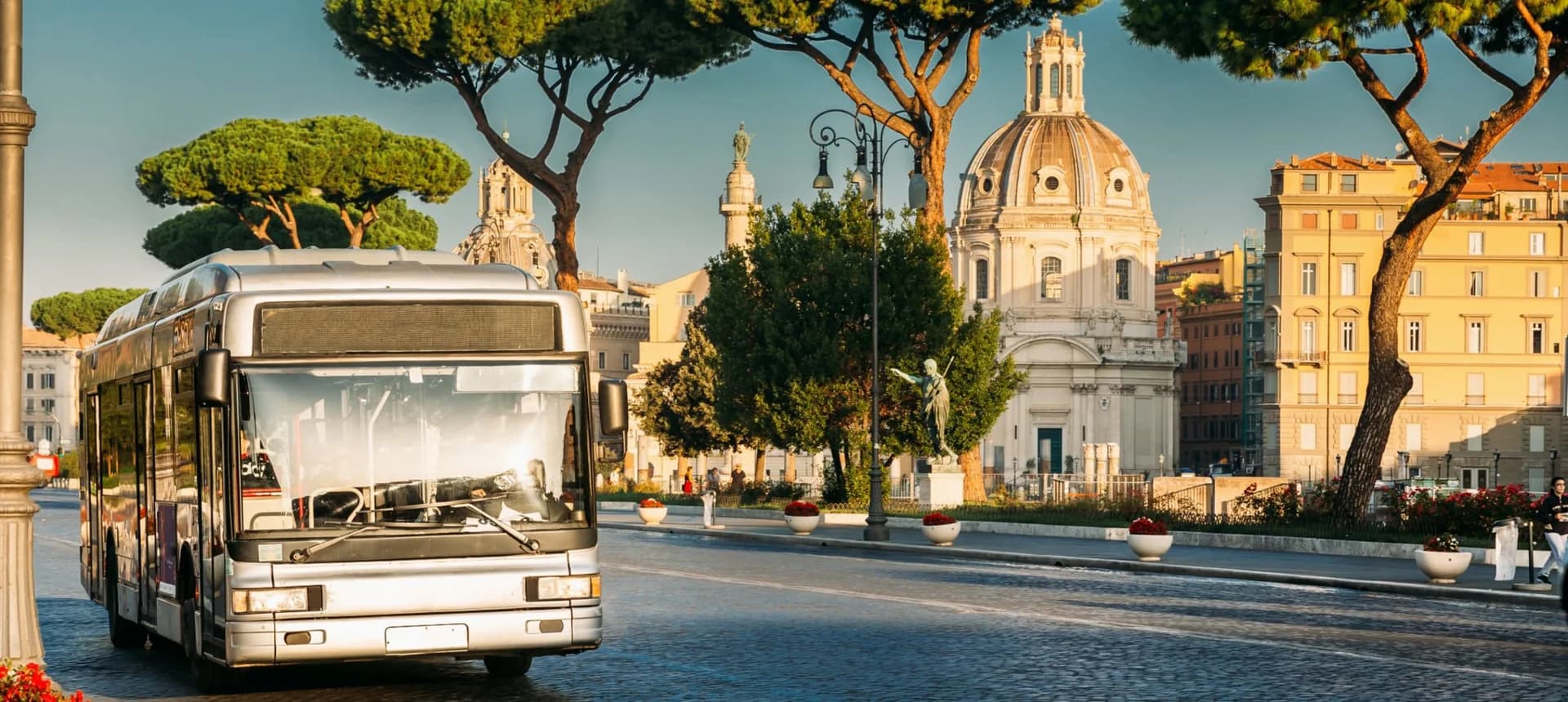
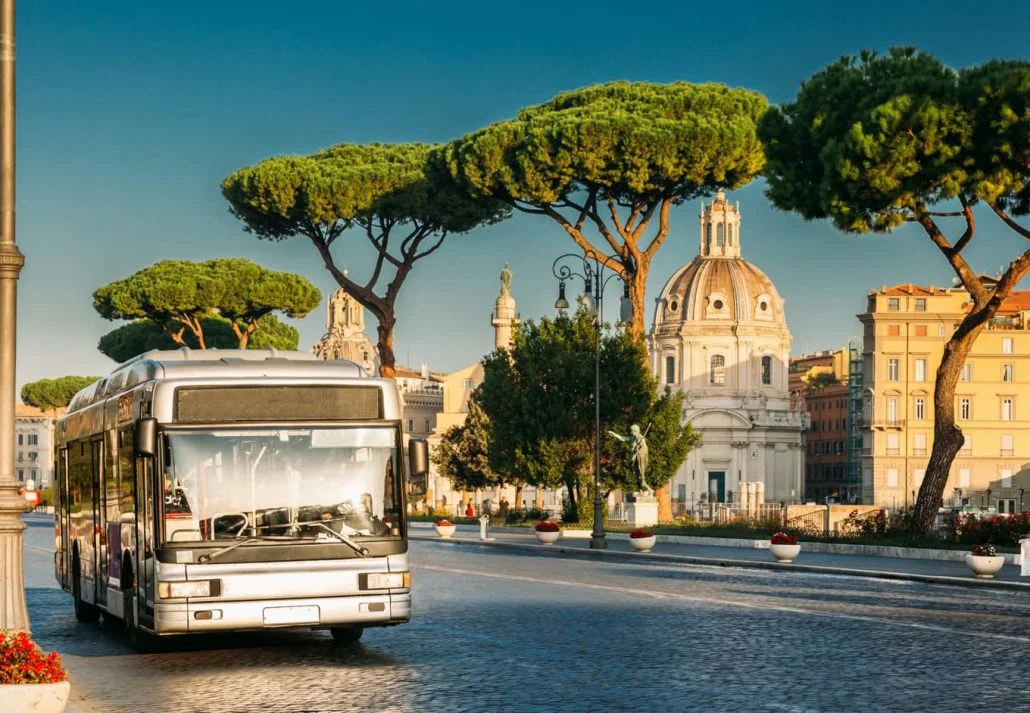
Visitors can also navigate around Rome by taking the bus public transport system. This is a great option for getting around the city, especially since the metro line is quite limited and does not reach certain parts of the Italian capital (such as the core of ancient Rome).
Rome currently has 338 bus lines that run throughout the day and 22-night buses. They are frequent, but sometimes are delayed, especially during the high season when the traffic is more intense.
For information about the bus’s route, check the informational signs at the bus stops on the sidewalk. Several bus stops now include digital signs where you can find the number of the bus and when the next is due to arrive.
Tram
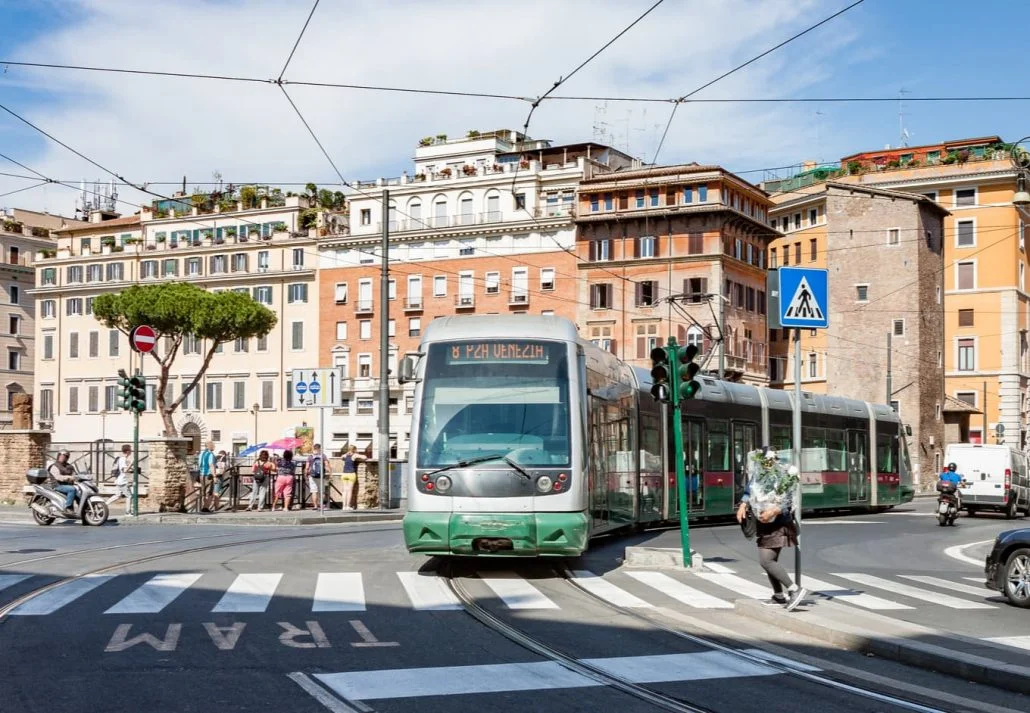
There are six tram lines running across Rome. The trams are cleaner than the public buses, but due to the fact that the network is still quite limited, this public transport method does not take you to the city center and major tourist attractions. For that reason, the tram is not the best option for sightseeing in Rome.
Commuter Trains
Rome has an urban railway system called Ferrovie Urbane, which features three train lines: Roma-Lido, Roma-Giardinetti, and Roma-Nord. They connect the city to other destinations in the Lazio region, making it the perfect option for going on day trips to Lido, Viterbo, and Giardinetti.
Taxis
Taxis are often overlooked by travelers who visit Rome, mostly due to their significant-high rates, and scams. However, they can be a comfortable way of getting from one place to another in the city, especially if you feel too tired to walk, or simply don’t feel like taking public transport.
Rome's official cabs are always white and have a "taxi" sign on the roof, as well as their license number printed on the doors. While it’s not common for people to hail taxis on the street, you can either get one of the designated taxi stands, book a pickup with the FREE NOW app (former MyTaxi), or order one by phone from the taxi company. The most common numbers are 060609 (for the Rome city) and 063570 (the largest radio-taxi operator in Rome.)
The basic fare is €1.60 to €1.10 per kilometer, from Monday to Friday 6 am to 10 pm. Anytime from 10 pm to 6 am it is €6.50. On Saturdays, Sundays and holidays it is €4.50, from 6 am – 10 pm.
Alternatively, if you need to get somewhere quickly, you can also use ridesharing apps such as Uber.
Have you secured your stay in captivating Rome yet?
Immerse yourself in Rome's timeless beauty, from awe-inspiring landmarks like the Colosseum to indulging in exquisite Italian cuisine.
UseCuddlyNest to filter your search and find a dream stay next to iconic landmarks like the Colosseum and the Pantheon. Embrace luxury and comfort with stays starting from an irresistible $87 a night! Your dream getaway is just a click away.
Find your kind of stay
Compare millions of stays — hotels, apartments, villas, and more