Frequently asked questions about jumeirah mosque - all you need to know
Can non-Muslims visit the Jumeirah Mosque?
<p>Yes, Jumeirah Mosque is the only mosque in Dubai open to non-Muslims. As part of the "Open Doors, Open Minds" program, it welcomes visitors of all faiths to promote cultural exchange and understanding of Islam.</p>
Is there a dress code for people visiting Jumeirah Mosque?
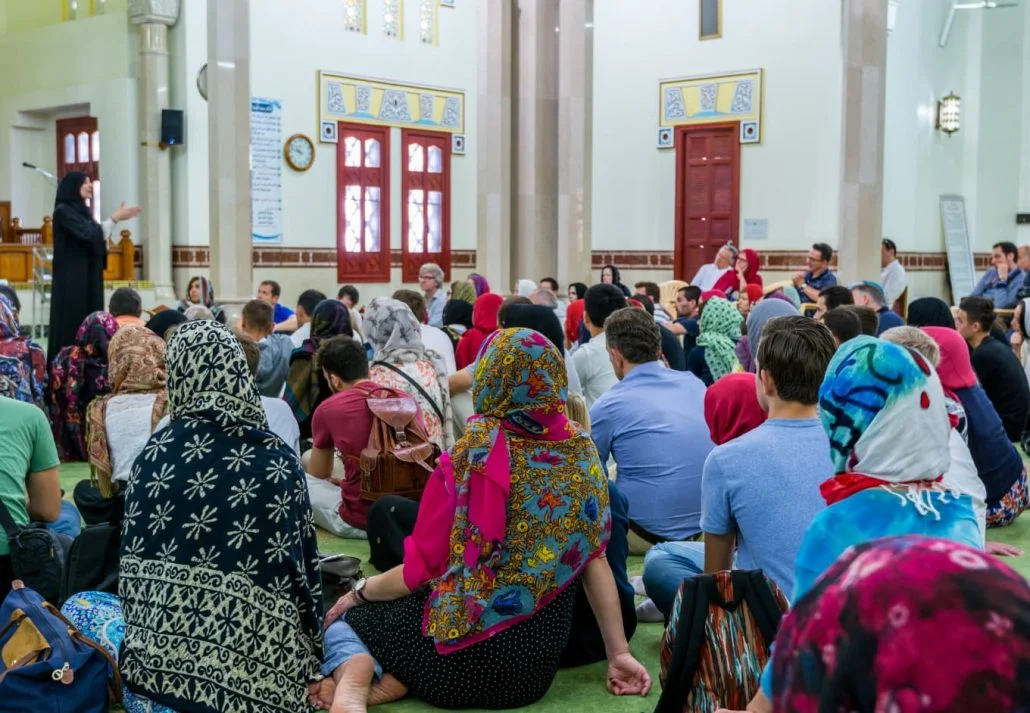
<p>Yes, respectful and traditional clothing is required. For both men and women, clothing should cover the shoulders and knees. Women are also required to cover their heads. The mosque provides rentals for those who aren't appropriately dressed.</p>
Are there guided tours available at Jumeirah Mosque?
<p>Yes, Jumeirah Mosque offers guided tours through the Sheikh Mohammed Centre for Cultural Understanding (SMCCU). Led by knowledgeable guides, these tours provide a deeper understanding of the mosque's beautiful architecture, Islamic traditions, and culture.</p>
CuddlyNest Team
CuddlyNest is the world's largest vacation rental search engine, comparing millions of accommodations across 200+ booking sites. Our editorial team of seasoned travelers and local experts shares insider tips, destination guides, and travel inspiration to help you plan the perfect trip — whether you're booking a cozy cabin, a beachfront villa, or an apartment in the heart of the city.
Jumeirah Mosque is one of the most iconic landmarks in Dubai. The mosque is a must-visit if you're a culture vulture seeking to soak in the history and traditions of Dubai. Over here, you can get a closer look at the intricacies of Islamic architecture and gain insights into their religion and faith.
Unlike many other mosques in the United Arab Emirates, it is open to non-Muslim visitors, making it a popular tourist destination. This cultural landmark is a key activity under the "Open Doors, Open Minds" program of the Sheikh Mohammed Centre for Cultural Understanding (SMCCU). taken by the authorities to cultivate a greater understanding of the rich Emirati and Islamic culture.
Construction of the Jumeirah Mosque began in 1976 and it took three years to be built. Inspired by Cairo's Al Azhar Mosque, the mosque was a gift from the late Sheikh Rashid bin Saeed Al Maktoum, the former ruler of Dubai, to his son, Sheikh Mohammed bin Rashid Al Maktoum, the current ruler of Dubai. Today, the mosque can accommodate over 1,200 worshippers and has become a popular spot for prayer, reflection, and learning.
Design & Architecture
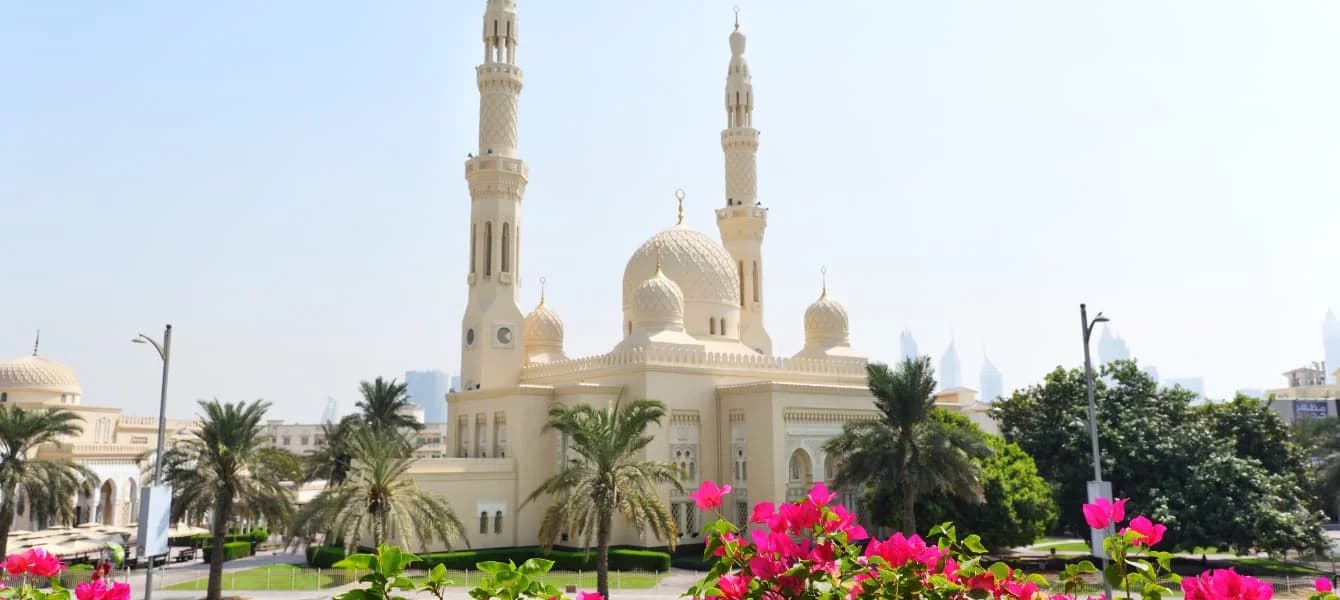
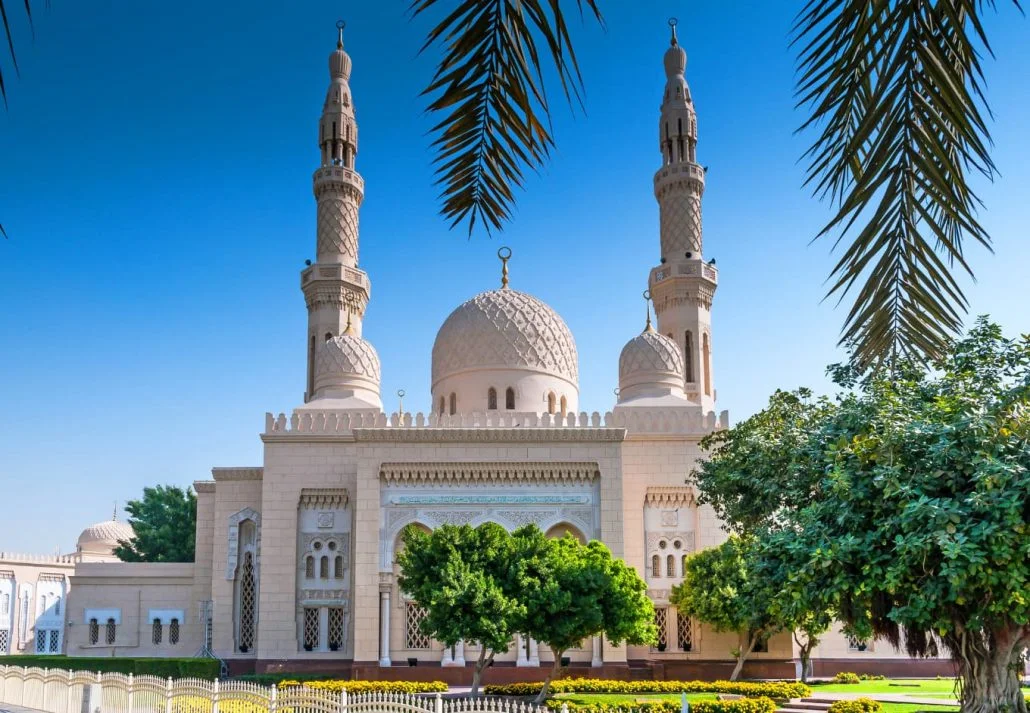
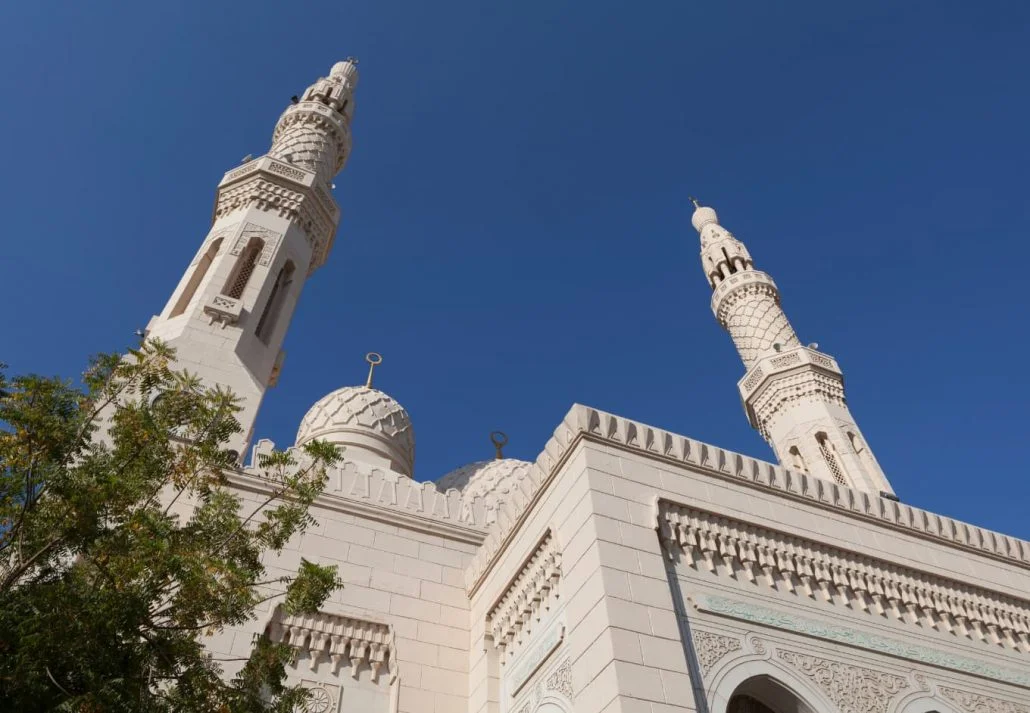
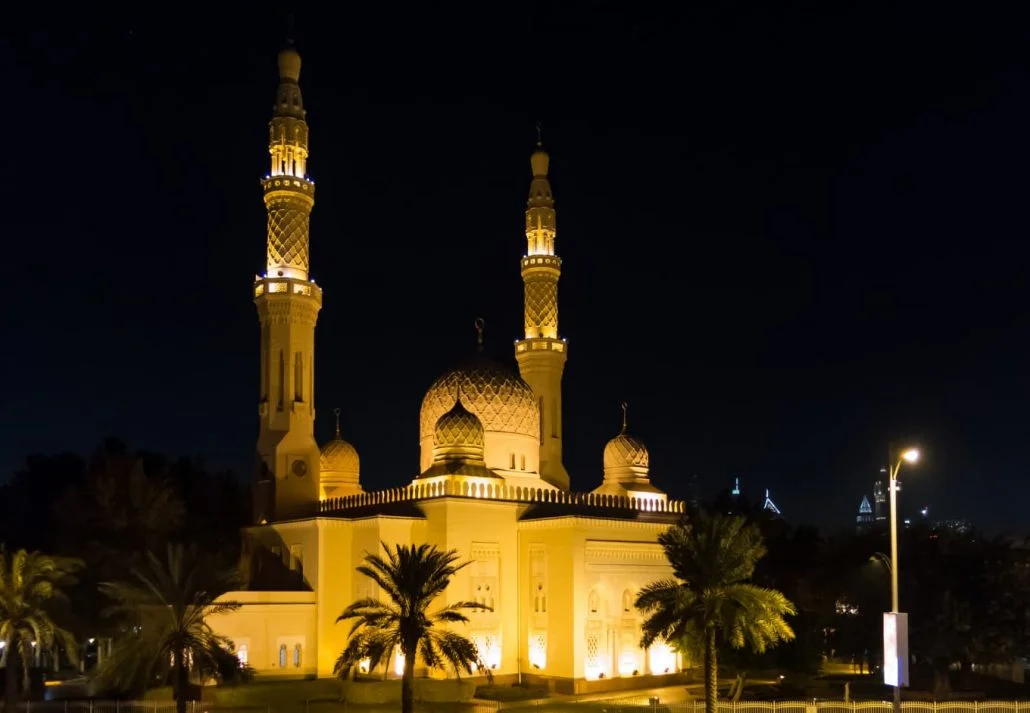
Jumeirah Mosque is a beautiful example of Islamic architecture, built in the medieval Fatimid style that originated in Syria and Egypt. The Fatimid style is known for its use of geometric patterns and this is visible across the facade and domes.
The mosque is entirely clad in white stone, which gives it a clean and elegant feel. Two minarets featuring intricate stonework flank the facade, and the large central dome is the focal point that symbolizes heaven. The lush and shaded pathway leads to an outdoor ablution space and an indoor majlis.
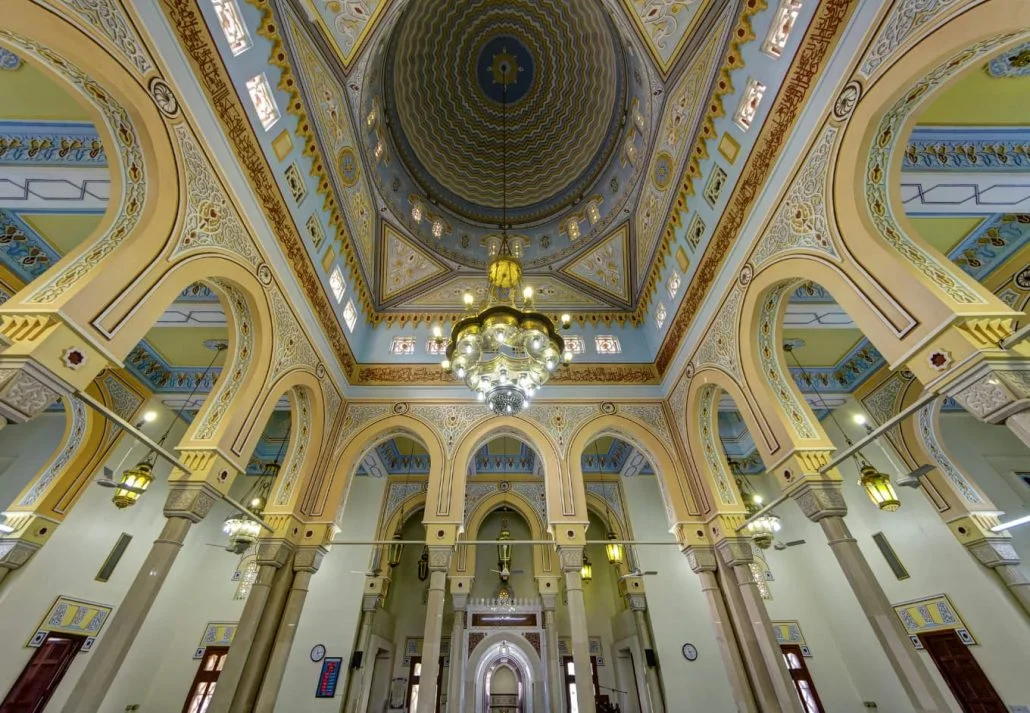
Inside, the main prayer hall pulls all focus with its richly decorated interiors, soothing tones of apricot, cream, and blue, geometric motifs, stained glass windows, plush green carpets, and dramatic chandeliers. Look for Quranic verses adorning the Qibla wall, also known as the prayer wall. Also check out Mihrab, a recessed niche within the Qibla wall, marking the focal point for prayer.
Jumeirah Mosque is designed to be a spiritual space. The use of white stone, geometric patterns, and natural light, all contribute to the serene atmosphere.
Hyatt Place Dubai Jumeirah: Simply decorated quarters in a relaxed hotel offering 2 restaurants, a bar & an outdoor pool.
ibis World Trade Centre Dubai: Laid-back rooms in a chic hotel offering an Italian restaurant, 2 bars & a free local shuttle.
Plan Your Jumeirah Mosque Visit
Opening Hours
Jumeirah Mosque is open to visitors of all faiths from 9 AM to 5 PM, Saturday to Thursday.
The mosque is closed to visitors on Fridays, the Islamic holy day.
Visitors are welcome to explore the mosque grounds and admire the architecture. However, they are not allowed to enter the prayer hall while prayers are being held.
Getting There
Jumeirah Mosque is situated on the northern end of Jumeirah Beach Road, opposite Dubai Marine Beach Spa and Resort.
Metro: Jumeirah Mosque is not directly accessible by metro. But you can use the Red Line to get off at Max Metro Station and then take bus X28 to Jumeirah, Grand Masjid. From here, it's 4 min away.
Bus: 12, 8, 88, C10, X28. The nearest bus stop is Palm Strip Center - 02. It's 2 min away.
Guided Tours
The Sheikh Mohammed Centre for Cultural Understanding (SMCCU) offers both public and private guided tours of the Jumeirah Mosque, six days a week. The tours are a great way to learn more about Islam, Emirati culture, and the mosque's history. The tours are conducted in English and Arabic, and there is an entrance fee per person. If you are visiting during Ramadan, you can still tour the Jumeirah Mosque, but you will need to book in advance.
First Guided Tour: 10 AM
Second Guided Tour: 2 PM
Duration: 75 minutes
Dress Code
When visiting Jumeirah Mosque, visitors are required to wear modest clothing. Men are required to wear long pants and shirts with sleeves. Women are required to wear loose-fitting clothing that covers their arms and legs. Women are also required to wear a head scarf. Kandooras (the Emirati dress for men) and Abayas (the Emirati dress for women) can be borrowed for visitors wearing clothes that don't meet requirements.
Photography
Photography is permitted at Jumeirah Mosque. In fact, it is one of the most photographed mosques in Dubai. However, visitors are expected to be respectful of worshippers and should avoid using flash and taking photos of people while they are praying.
Tips
It is ideal to reach the mosque 15 minutes before your guided visit for a smoother entry.
It's customary to remove your shoes before entering the mosque.
Avoid peak heat hours, especially midday. Evenings are ideal to appreciate the intricate details.
Be prepared to follow the law and respect local traditions even if you are not religious.
Visiting Jumeirah Mosque: Entry, Dress Code, and Tour Times
Jumeirah Mosque is the only mosque in Dubai open to non-Muslim visitors. Every other mosque in the city is restricted to worshippers. That fact alone makes this the most visited religious site in Dubai for tourists.
How to visit. The Sheikh Mohammed Centre for Cultural Understanding runs the "Open Doors, Open Minds" program at Jumeirah Mosque. Guided tours are available Saturday through Thursday. Morning tours run from 10am. A second session runs at 2pm. No advance booking is required for individuals. Arrive at the gate, pay the entry fee (AED 35 per person as of the last update), and join the tour. Groups can book in advance through the SMCCU website (cultures.ae).
Dress code. All visitors must dress modestly. Women are required to cover their hair, arms, and legs. The mosque provides abayas (full-length robes) and headscarves free of charge to women who arrive without them. You do not need to bring your own. Men must wear long trousers and avoid sleeveless tops. Shoes are removed before entering.
What the tour covers. Each tour lasts about 75 minutes. A guide explains Islamic prayer rituals, the call to prayer (Adhan), the significance of the Quran, and the role of mosques in daily life. Visitors can ask questions openly. The program is designed for dialogue, not passive observation. The tour ends with traditional Emirati breakfast: dates, Arabic coffee, and light snacks.
Location. Jumeirah Mosque sits on Jumeirah Beach Road in the Jumeirah 1 neighbourhood. It is roughly 15 minutes by car from Downtown Dubai and Burj Khalifa. No direct Metro connection. Take a taxi or bus from Jumeirah Centre or Mall of the Emirates. Dubai hotels on CuddlyNest from AED 189/night.
Jumeirah Mosque Architecture and History
Jumeirah Mosque was completed in 1979. The building is a deliberate showcase of Islamic architecture commissioned under Sheikh Rashid bin Saeed Al Maktoum, father of the current ruler of Dubai. It was built to demonstrate Islamic culture to visitors and to serve the growing Jumeirah residential district.
Architectural style. The mosque combines Fatimid and Mamluk architectural traditions. Fatimid refers to the dynasty that ruled North Africa and the Levant from the 10th to 12th centuries, known for symmetrical facades and tall slender minarets. Mamluk architecture, originating in medieval Egypt, is known for elaborate stone carvings, striped masonry, and large central domes. Jumeirah Mosque blends both: two matching minarets flank a large central dome. The exterior is built from pale yellow-pink sandstone. The facade is covered in geometric carved detail.
Capacity and scale. The mosque accommodates up to 1,200 worshippers. The interior features a large prayer hall beneath the central dome, with natural light entering through the dome's windows. The mosque remains a functioning place of worship. The five daily prayers are observed, and the mosque closes to visitors during prayer times.
Why it appears on the UAE 200-dirham note. Jumeirah Mosque was printed on the 200-dirham banknote before the note was redesigned. The image circulated widely and contributed to the mosque's recognition across the UAE and Gulf region. Jumeirah hotels on CuddlyNest from AED 250/night.
Frequently Asked Questions: Jumeirah Mosque Dubai
Can non-Muslims visit Jumeirah Mosque?
Yes. Jumeirah Mosque is the only mosque in Dubai that allows non-Muslim visitors. It is managed by the Sheikh Mohammed Centre for Cultural Understanding (SMCCU), which runs guided tours under the "Open Doors, Open Minds" program. Tours run Saturday through Thursday. Morning sessions start at 10am. Dress code is enforced: modest clothing, covered hair for women (abayas provided free). Entry fee is approximately AED 35. No other mosque in Dubai offers public access to non-Muslims.
Do you need to book tickets for Jumeirah Mosque?
Individual visitors do not need advance tickets. Walk up to the gate before the scheduled tour time and pay at the entrance. Groups of 10 or more are encouraged to book in advance through cultures.ae to secure a slot. Tours run most mornings and some afternoons, but the mosque is closed on Fridays to non-Muslim visitors. Arriving 10-15 minutes before the tour starts is recommended. The mosque closes for tours during prayer times. Check the current schedule at cultures.ae before visiting.
What is special about Jumeirah Mosque?
Three things distinguish it. First, it is the only mosque in Dubai open to non-Muslims. Second, the "Open Doors, Open Minds" program provides structured, dialogue-based tours that go beyond a surface visit. Visitors can ask questions about Islamic practice and Emirati culture directly. Third, the building itself is one of the finest examples of modern Islamic architecture in the Gulf: a Fatimid-Mamluk design in pale sandstone, with two minarets and a central dome, built in 1979 and preserved in its original form. The mosque was also printed on the UAE 200-dirham note. Dubai hotels near Jumeirah Beach from AED 189/night.
Find your kind of stay
Compare millions of stays — hotels, apartments, villas, and more
Can you visit Jumeirah Mosque without a guided tour?
<p>Yes, visitors are encouraged to explore the mosque at their own pace, and there is plenty of signage around to help explain different facets of the building.</p>
What's the best time to visit Jumeirah Mosque?
<p>The mosque can get crowded, so weekdays outside of prayer times are generally recommended for a quieter visit. You can also time your visit according to the guided tours that are regularly conducted.</p>